





Eye For Film >> Movies >> Home Bodies (2026) Film Review


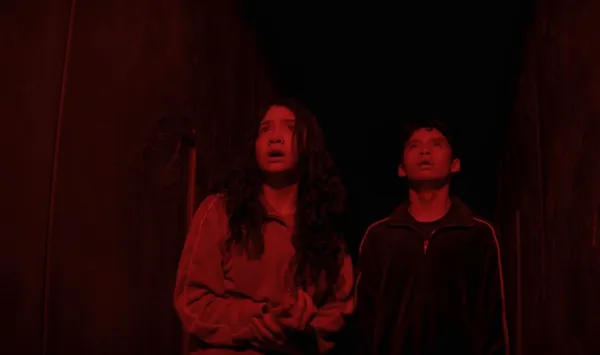

Blue (Ian Ho) wants to play catchball. He’s sure that if they really try, they can beat their record today. But Red (Emma Ho, Ian’s real life twin) says she’s tired. When she eventually relents, she throws the ball right at his head, injuring him and breaking a light, getting them both in trouble.
They’re at that age.
It’s an age we don’t see all that much in cinema: a little too early for sexual awakening, a little too late to be childishly cute. They still feel a deep sibling bond but they’ve started to get on each other’s nerves more than ever. The outward urge is kicking in. That’s always hard to handle, but it presents particular difficulties for two children who have no carers physically present at all, and who have never had the opportunity to leave their home.
No context is supplied to viewers at the start of this 2026 Fantasia pick, though there will be a rapid-fire attempt to compensate for that at the end. We catch glimpses of Red and Blue as babies in their cribs, and see them play as younger children, so we know that they’ve been in the house all their lives. That doesn’t mean they’ve tired of games like jumping in and out of doorways to see if they can outpace the automatic lights, an early form of testing which most kids go through before they start actively trying to dismantle the structures of their world. We get the impression that for these two, most of the destruction testing is in the past. A scar on Blue’s hand speaks to what happened when he got too far out of line.
The children are used to having everything provided for them. Food appears automatically in the kitchen cupboards and fridge; it’s heated in an instant in the microwave. Dishes seem to clean themselves. Garbage has to be taken out, but that simply means dumping it in the vast, cavernous cellar – the one place they don’t seem to have explored – and running back up the steps to say the magic words that make it go away. Clean clothes also appear as needed, and every afternoon there is a new tape under the television. Admittedly, they have now seen most of the episodes on them before. The programme they feature is Barn, in which puppet animals have peculiar adventures and deliver moral lessons.
It’s a detailed world, but it’s a small one. The children’s only other input comes from ‘father’, a voice which emits from behind a closed door, giving advice or apportioning blame. One day, they receive a very special present – a new pal (Ess Hödlmoser) who looks like a person but doesn’t talk. Father says they need to look after it. This strange gift upsets their equilibrium, prompting a crisis and the gradual breakdown of the rules by which they have lived.
Films built around a single concept like this often lack staying power, but Home Bodies fills out its running time pretty well. Key to this is the dynamic between its young leads and the way that director Casey Walker keeps audience sympathies shifting between their characters. Both are likeable kids, but capable of being drawn to dark things. By keeping sexuality almost wholly absent, Walker removes the reflex option of blaming it for psychological or social ills, forcing viewers to reckon instead with a more fundamental perspective on the nature of supposed childhood innocence.
The darkness in the film is balanced by humorous observations about the way that kids in general tend to take their support frameworks for granted. Their confidence and proprietary approach to their space, meanwhile, contribute to a particular kind of creepiness which stems from viewers’ recognition of the wrongness they can’t see. Walker’s very straightforward directorial style supports their approach of taking everything at face value, and it’s only when their systems begin to disintegrate that his technique also shifts, inviting us to engage with the chaos underlying it all.
Reviewed on: 25 Jul 2026